
About Dr. Diego F. Cuadros
Professor of Epidemiology, Digital Epidemiologist, and AI-Human Interaction Researcher
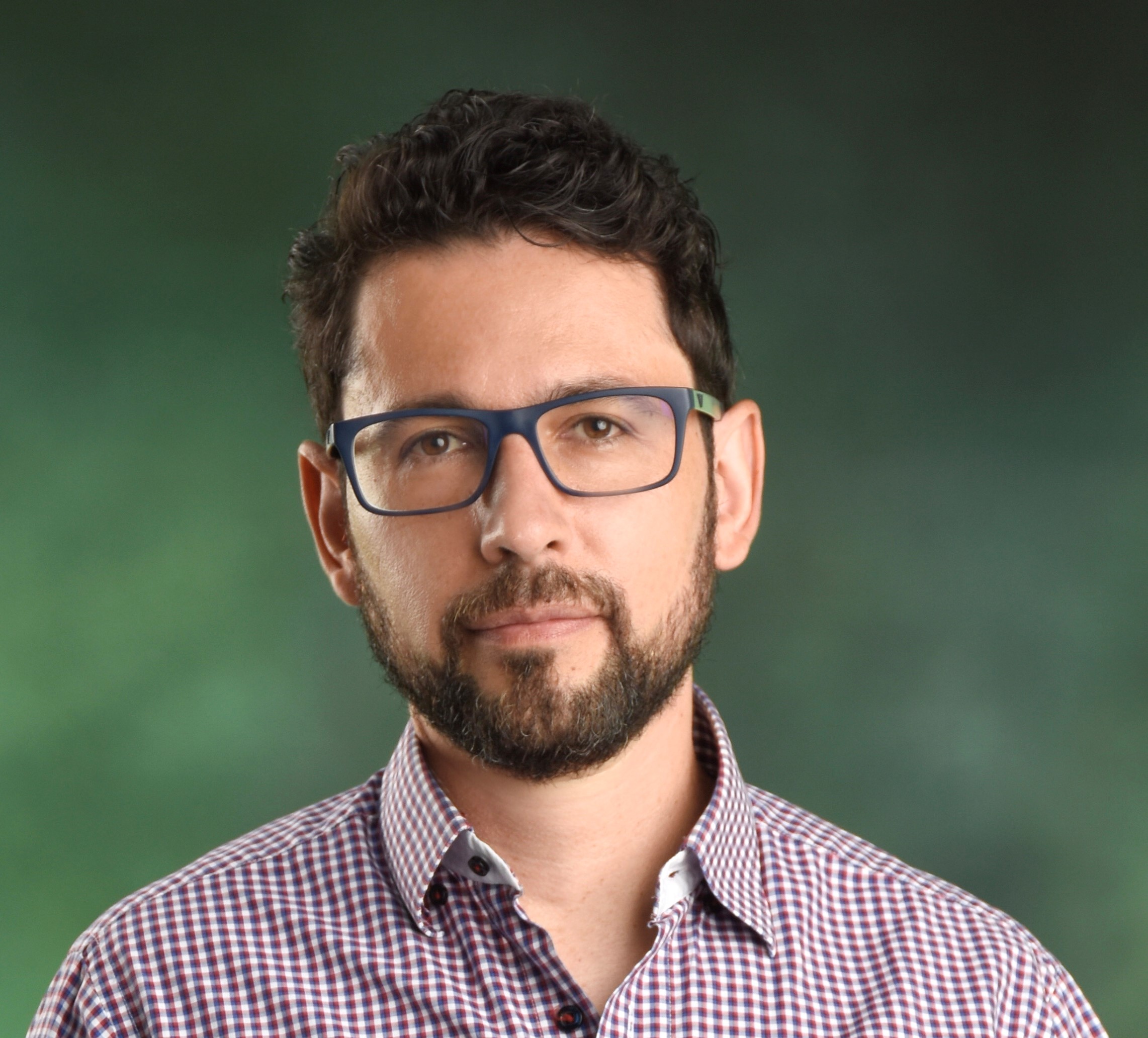
Dr. Diego F. Cuadros, Ph.D.
Professor, University of Cincinnati
Director, Digital Epidemiology Lab
Download CVBiography & Mission
Born and raised in Bogota, Colombia, Dr. Diego F. Cuadros earned his B.Sc. in Biology from the National University of Colombia, followed by a Ph.D. in Biology from the University of Kentucky. His doctoral research on HIV epidemiology in sub-Saharan Africa cultivated his passion for quantitative epidemiology and health geography.
Dr. Cuadros's current research program bridges AI-human interaction, agentic AI systems, digital epidemiology, mathematical modeling, and disease ecology. His group studies how AI agents behave in real scientific workflows, how memory and oversight should be governed, and how complex data can be translated into actionable insight for researchers, health agencies, and communities.
Research Pillars
Designing and evaluating AI agents, collaborative memory systems, oversight mechanisms, and decision workflows that keep human authority visible and accountable.
Pioneering research on HIV/AIDS, COVID-19, and Hepatitis C, focusing on co-infections, transmission dynamics, and intervention strategies in high-risk populations.
Utilizing GIS and spatial analysis to map disease hotspots, uncover environmental and social determinants of health, and analyze geographic disparities in healthcare access.
Analyzing the spatial and temporal evolution of the U.S. opioid crisis, identifying demographic shifts and geographic drivers to inform targeted public health interventions.
Career Trajectory
Technical Expertise
AI-Human Interaction & Agent Systems
Geographic Information Systems (GIS)
Spatial Statistics, Geospatial AI & Modeling
Mathematical & Computational Epidemiology
Data Science, R, Python & Public Health Analytics
Global Research Footprint
My research spans five continents, involving universities, ministries of health, global health institutes, and data partnerships. This interactive map highlights projects where AI-human interaction, modeling, spatial epidemiology, and disease ecology support real-world decisions.
Loading Interactive Map...